78,400lines of AI-generated code on the homepage
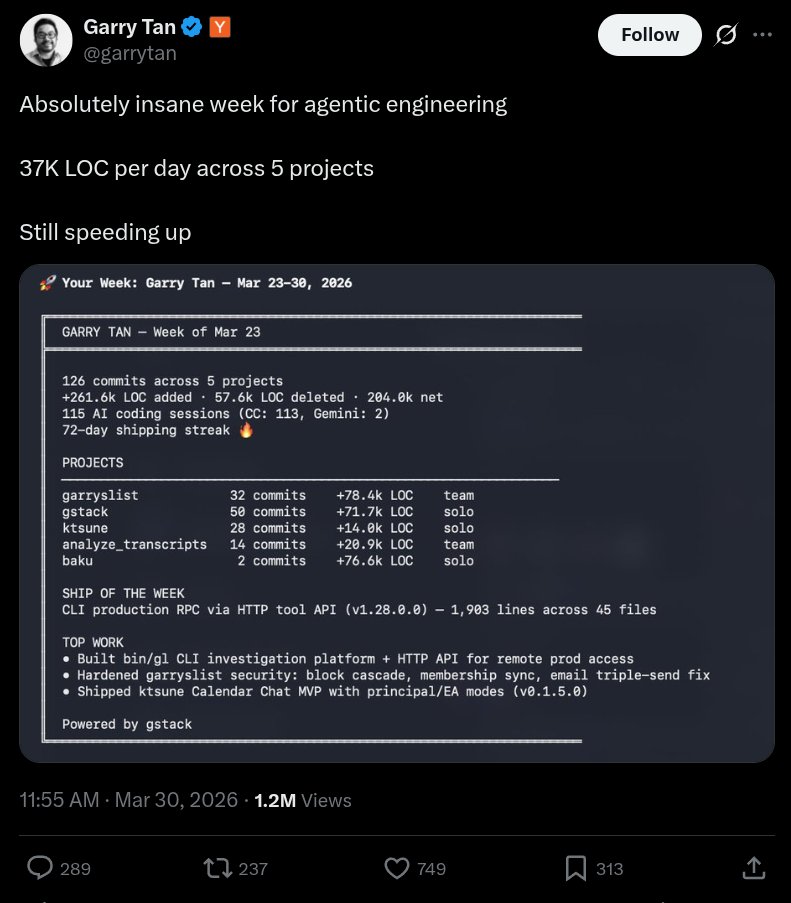
Audit of Garry's own GStack-built site (garryslist.org) after he bragged about a 37,000-LOC/day output and a 72-day shipping streak. The site is the brand demo. The brand demo is 78,400 lines.
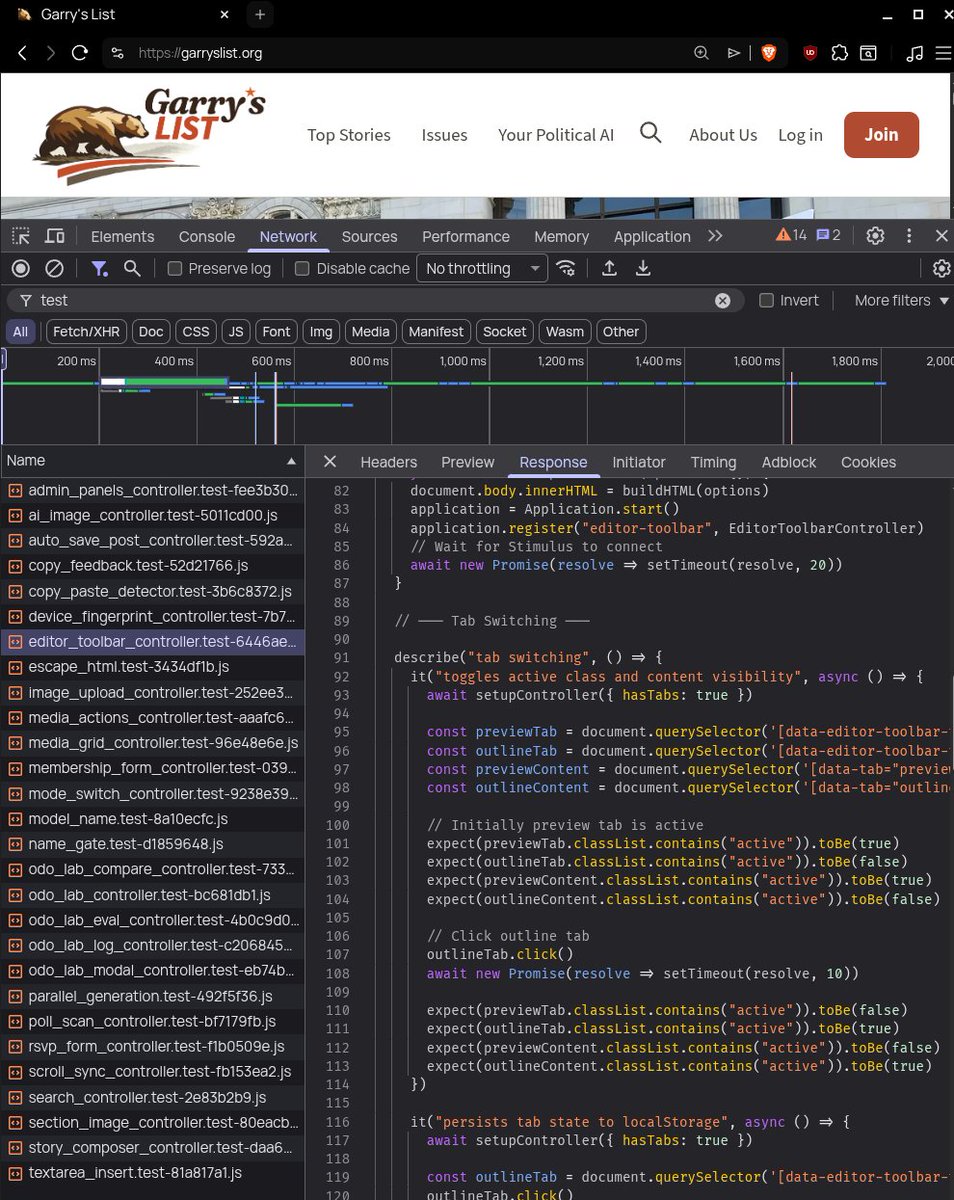
28test files shipped to every visitor
Not test results — actual test harnesses. membership_form_controller.test.js (89 KB) and friends, downloaded by every browser that hits the homepage. 300 KB of test code returning HTTP 200 on the public site. HAR file doesn't lie.
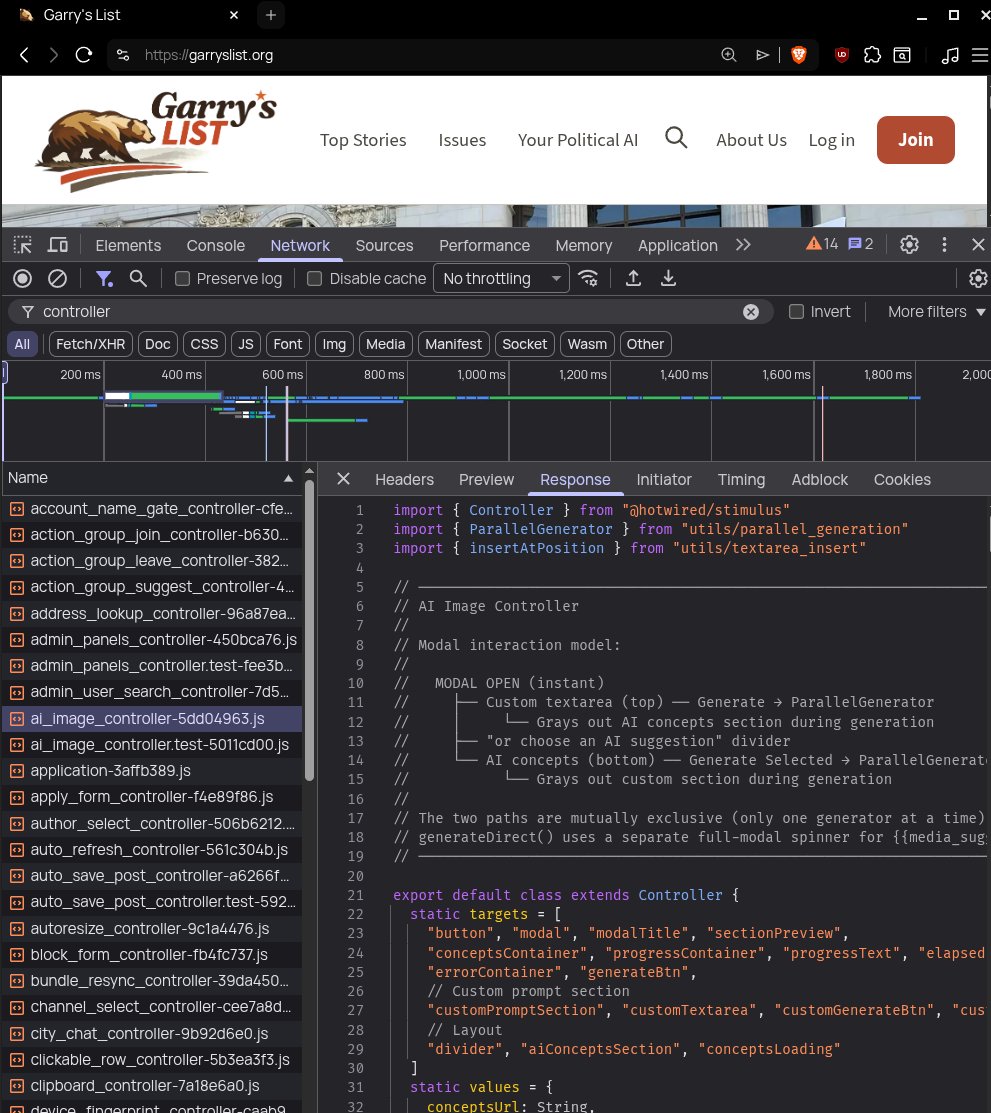
78Stimulus controllers loaded on a read-only homepage
AI image generation, voice extraction, video generation, radar charts, draft review — all bundled into the public landing page of a civic nonprofit tool. Most are never invoked client-side.
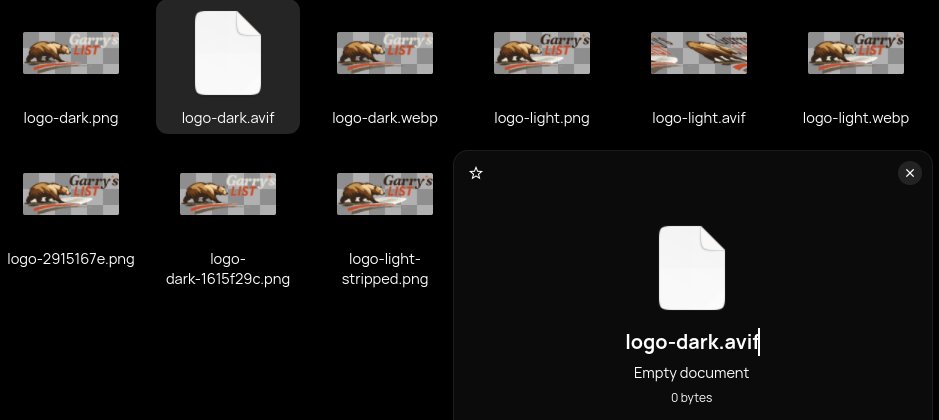
8×downloads of the same logo per page load
3 PNG copies, 2 WebP variants, 2 AVIF variants, plus an extra. The site downloads its own logo eight times to render it once. Default GStack scaffolding does not deduplicate.
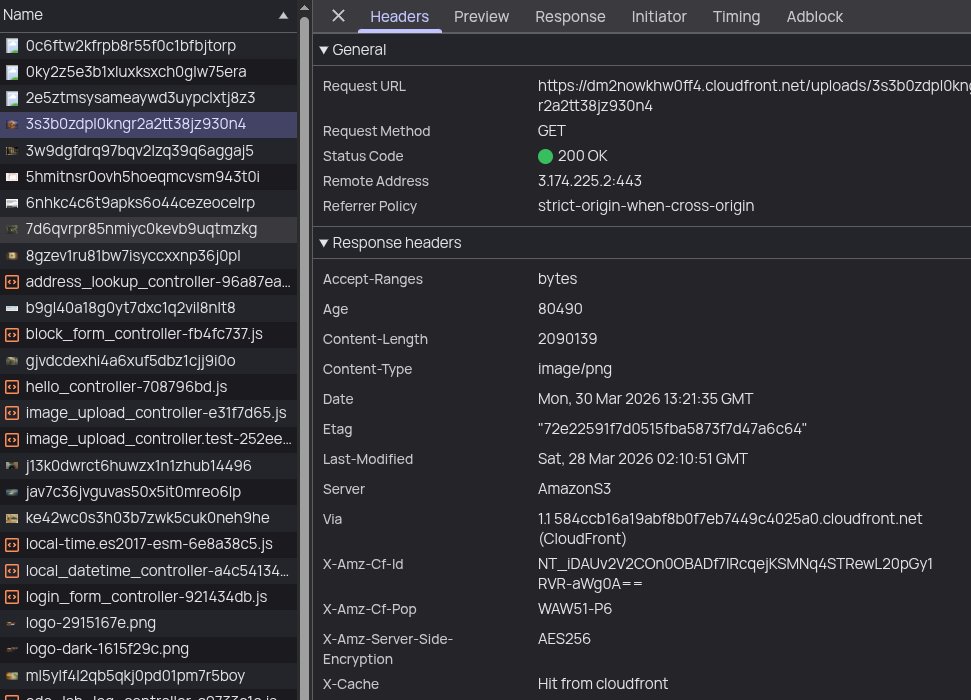
2.07 MBuncompressed PNGs from CloudFront
Article images served as raw, uncompressed PNGs (2.07 MB, 1.9 MB) when even basic Next.js / Rails image-pipeline defaults would compress them to a tenth of that. Cost-of-bandwidth borne by every visitor.
520 KBTrix rich text editor on a read-only homepage
Spillover from a backend admin route, never tree-shaken out of the public bundle. The visitor's browser parses 520 KB of JS to render zero editable fields.
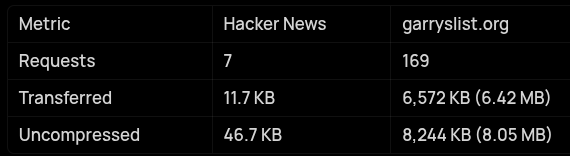
169HTTP requests per page load
For comparison: the Hacker News homepage — run by Y Combinator, the org Garry leads — makes 7 requests and transfers 12 KB. Garry's GStack site makes 169 requests. Same brand, 24× the surface, 0× the discipline.
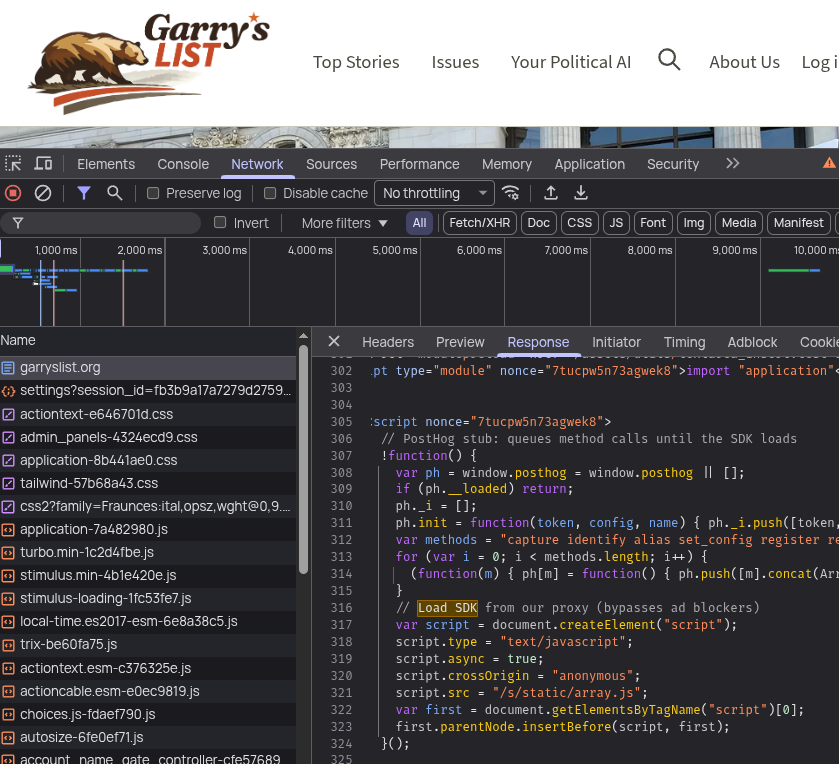
1comment that summarizes the whole posture
The source code literally contains: "// Load SDK from our proxy (bypasses ad blockers)". For a 501(c)(4) civic nonprofit. The frame is "we build for the public good"; the ship is "we route around the user's consent."